
2025 AESP Annual Learnings: Demystifying AI and Data
AI isn't about replacing human insight, it's about enhancing it.
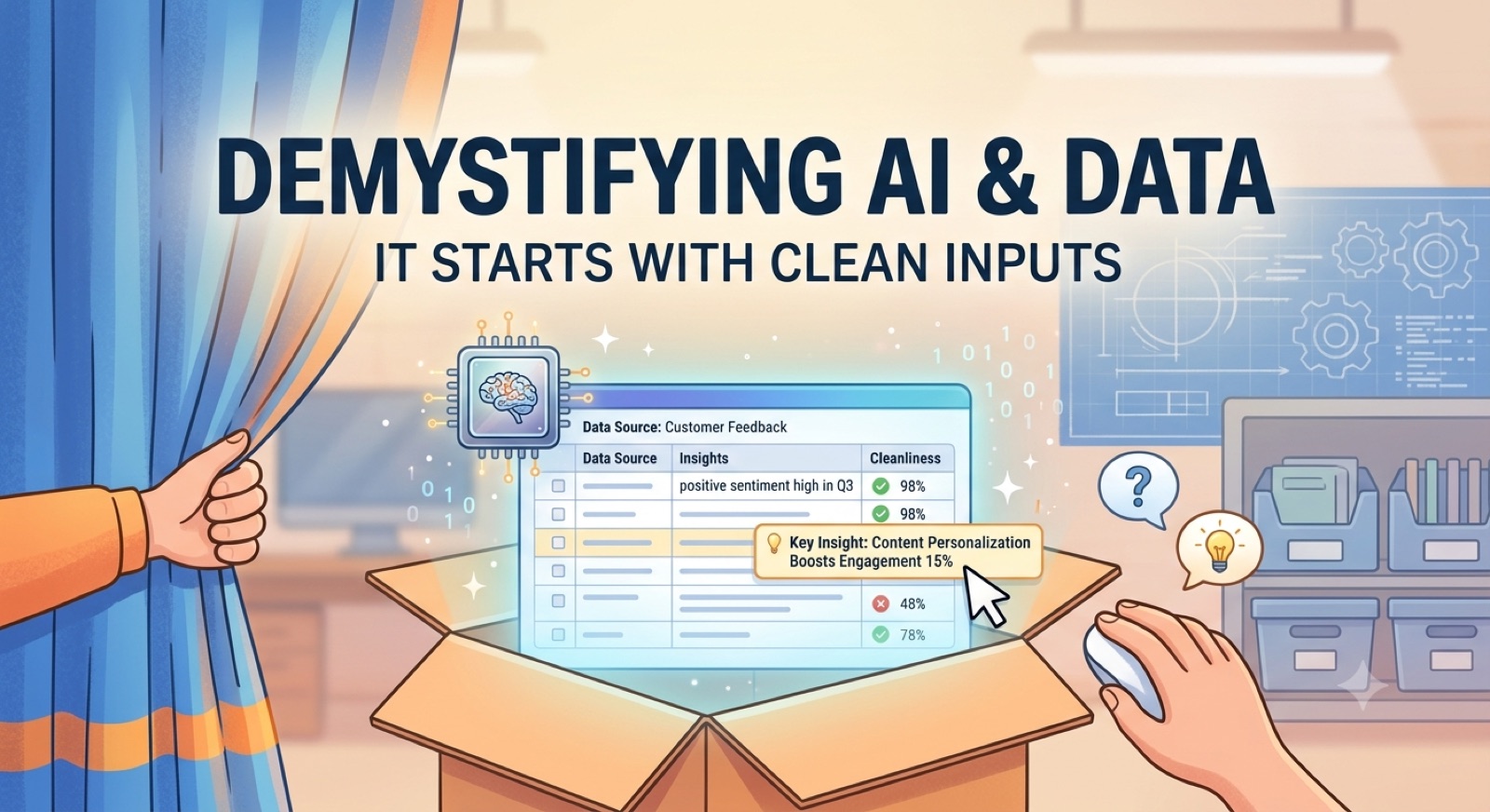



Last week, I had the opportunity to attend the AESP Annual Conference in Phoenix, where I participated in a particularly insightful workshop: "AI in Real Time: A Hands-On Learning Lab to Demystify Data Processes" hosted by Brent Sitterly from Fix Point Analytics and Doer/Maker 's own Ashley Santor . The experience left a strong impression, especially regarding how to make AI and data more accessible.
One of the biggest challenges in working with AI and data isn’t necessarily the technology itself, it’s understanding how to interact with it meaningfully. The workshop emphasized that AI tools aren’t just for data scientists; with the right approach, anyone can harness data for insights and decision-making. The key is breaking down complex processes into approachable steps, which is exactly what we did during the session.
Hands-On Learning: Cleaning, Calculating, and Analyzing
Instead of passively listening to a lecture, we jumped straight into practical application. Working in table groups, we:
- Downloaded an Excel dataset
- Cleaned up inconsistencies and structured the data
- Applied formulas to extract key insights
- Performed a brief analysis to identify patterns
Through this process, it became clear that data isn’t valuable until it’s properly prepared. Even the most advanced AI models rely on clean, structured data to produce meaningful results.
Beyond the technical exercises, we also discussed an essential cautionary lesson: data without context can be misleading. It’s easy to spot correlations, but without a deeper understanding of what drives the numbers (both internal and external factors), those correlations can lead to faulty assumptions.
For example, imagine a utility company sees a spike in energy consumption. Without proper context, one might assume it’s due to inefficient appliances; but external factors like weather patterns, regional regulations, or behavioral trends could be playing a role. AI and analytics are only as effective as the people interpreting them.
Key Takeaways
1. AI and data should be accessible to everyone, not just experts
2. The foundation of good AI is clean, structured data
3. Understanding context is critical, correlation is not causation
This workshop reinforced that AI isn’t about replacing human insight...it’s about enhancing it. By making data approachable and encouraging critical thinking, we can leverage AI as a powerful tool rather than an intimidating black box. But remember: your AI output will only be as good as the information or data that you input - garbage in, garbage out.
No pressure. No hard sell. Just a real conversation.
Ready to make sense of your Marketing & Advertising efforts?