
Key Takeaways from AESP 2025: Elevating Diverse Suppliers
Strategies for growth and connection in a changing landscape.



Building a More Inclusive Energy Future: Key Takeaways from AESP 2025
This past week, I attended the AESP Annual Conference in Phoenix, where industry leaders, innovators, and changemakers gathered to discuss the future of energy. One workshop that particularly stood out was Elevating Diverse Suppliers: Strategies for Growth and Connection. It underscored an urgent and ongoing conversation in the energy sector—how diversity in the supply chain isn’t just about representation but about driving real innovation and impact.
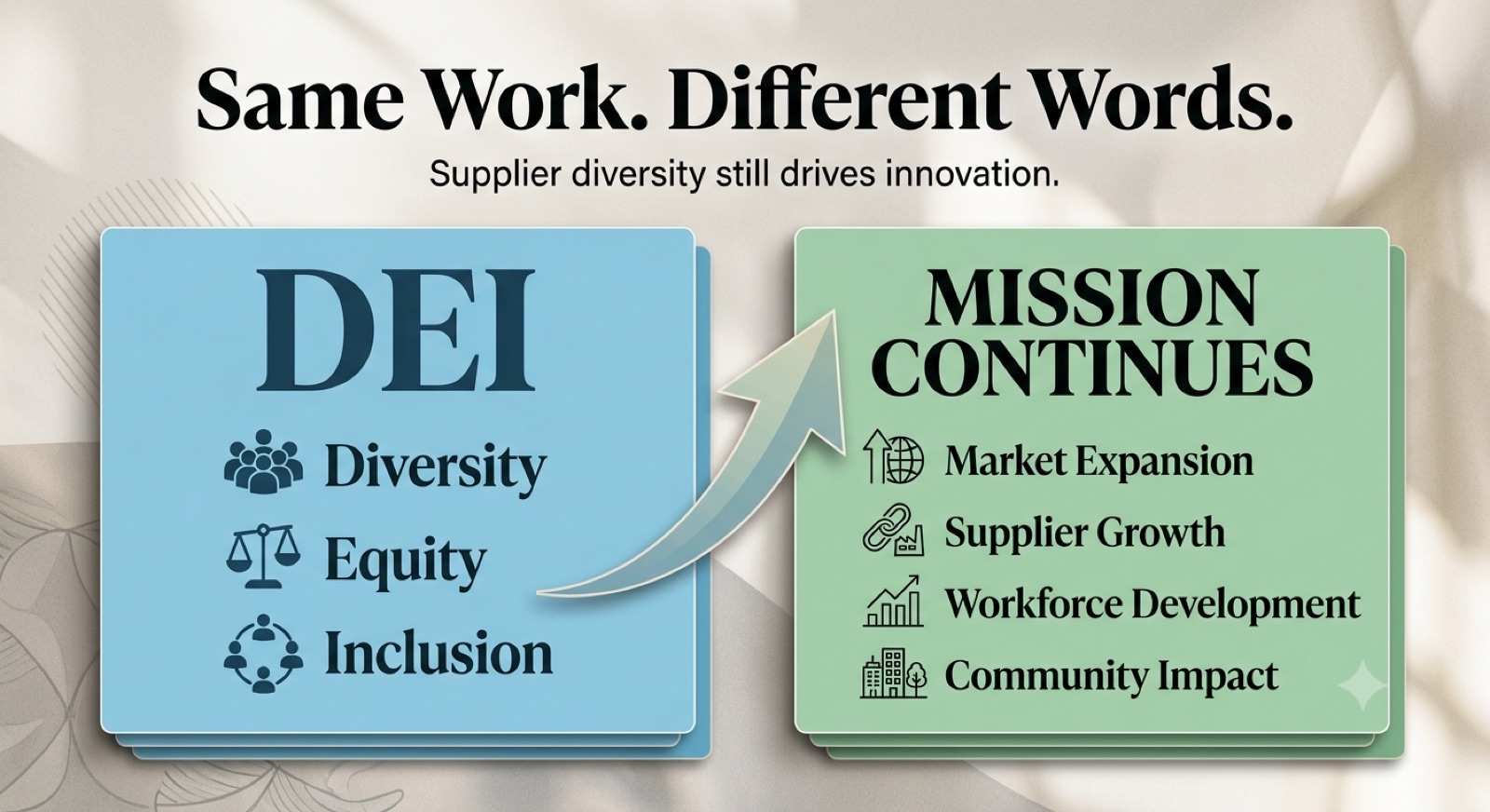
But this year, there was an added layer of complexity. With the current Trump administration rolling back Diversity, Equity, and Inclusion (DEI) initiatives, the conversation has shifted—not in purpose, but in language. The key takeaway? The work will still get done, but we have to "code-switch" to survive.
DEI by Any Other Name: Adapting to Policy Shifts
One of the most striking discussions in the workshop was how federal policies are now penalizing organizations that explicitly use DEI-related terms in contracts, RFPs, and funding applications. This means that if companies want to win federal resources, they need to carefully adjust their language—words like "equity," "inclusion," and even "diversity" are now red flags that can disqualify bids.
But here’s the reality: The work itself hasn’t changed—only the words. This is where "code-switching" comes in.
For years, Black and other marginalized communities have used code-switching to navigate predominantly white spaces, adjusting language and tone to be heard and accepted. Now, supplier diversity efforts must take the same approach. If "DEI" is off the table, we talk about "market expansion," "talent optimization," "workforce development," and "community-driven impact" instead.
One speaker put it bluntly:
“Nobody is stopping you from saying what you need to say. But if you want the contract, you have to say it differently.”
Diversity Still Drives Innovation in Clean Energy
Despite the linguistic gymnastics now required, the fundamental truth remains: Diversity fuels innovation. Organizations that embrace supplier diversity see increased financial performance, greater adaptability, and stronger program adoption. The energy industry is no exception—especially as it undergoes rapid transformation with clean energy initiatives, decarbonization efforts, and electrification strategies.
A memorable analogy from the discussion compared supplier diversity to the story of the Hot Cheetos inventor—how a janitor’s innovative thinking turned a rejected product into a multimillion-dollar success. This same kind of fresh, outside-the-box thinking is exactly what the energy sector needs to break through its traditional barriers.
Navigating Supplier Diversity in a Changing Landscape
While diverse suppliers are crucial to the industry’s success, they still face significant hurdles. Many struggle with complex certification processes, lack of access to RFPs, and shifting political landscapes that threaten inclusion efforts. Some attendees even shared stories of contracts being lost simply because the wrong DEI-related terminology was used in the proposal.
To stay competitive, businesses must be strategic:
Follow the Language of the RFP – If DEI isn’t explicitly mentioned, don’t include it. Instead, use alternative phrasing like “supplier expansion” or “community engagement”.
Leverage Relationships – Many federal and state agencies are also struggling to navigate these restrictions. Building strong networks and direct relationships can open doors that rigid procurement policies might close.
Keep Doing the Work – As one speaker said, “It doesn’t change the work. It might change the words, but it doesn’t change the work”.
Moving Forward: What Can We Do?
The workshop made it clear that while challenges remain, the path forward requires action from all of us:
Utilities & Corporations: Commit to transparency in procurement and actively seek diverse suppliers—not just to check a box, but to drive innovation.
Diverse Suppliers: Be adaptable. Learn the new language, stay strategic in RFPs, and continue building relationships within the industry.
All of Us: Support policies and programs that remove barriers for diverse suppliers and create equitable opportunities for growth—whatever words we have to use to describe them.
The AESP conference left me both inspired and challenged—reminding me that the future of clean energy isn’t just about technology and policy; it’s about people. If we truly want an inclusive, resilient, and innovative energy sector, diversity can’t be an afterthought—it has to be the driving force.
And no matter what words we use, we’re still doing the work.
What are your thoughts on supplier diversity in the energy industry? Have you seen success stories or challenges firsthand? Let’s keep the conversation
No pressure. No hard sell. Just a real conversation.
Ready to make sense of your Marketing & Advertising efforts?