I Was Her Once
On accents, identity, and the language of where you came from.



Every afternoon, I pull up to the school just as the Pre-K and Kindergarten crowd spills out. That’s when I see her—this little girl, no older than five or six. I don’t know her name, but I know her. I hear her voice before I see her, that unmistakable melody of Puerto Rico in her words. Not just the accent—ese acento boricua puro, untouched—but the specific words, the rhythm, the music of the island. It makes me smile, warms something in me I didn’t realize had gone cold.
Because I was her once.
I came to this country when I was about her age. I, too, had an accent that hadn’t yet been scraped away by classrooms and television shows and the need to be understood. My Spanish was native, my English still foreign, and every word I spoke was stamped with home.
But accents fade.
Words get replaced.
Somewhere along the way, I stopped sounding like where I came from. Not because I wanted to—but because the world around me insisted. To fit in. To be understood. To survive.
And that’s why, as much as I smile when I see her, I also ache for her. Because I know what’s coming. The fading. The forgetting. The years ahead when she will question where she belongs. When she will defend her identity against people who think she doesn’t have the right to claim it. When she will feel like too much of one thing and not enough of another.
Too Puerto Rican for America.
Too American for Puerto Rico.
She’ll lose words—first the ones that only we Ricans use, then others. She’ll read Spanish slower, trip over verbs, forget how to translate something simple her abuelita once said. And yet, her English will never be fully hers either. There will be syllables that never fall quite right from her mouth. People will ask her where she’s from, or worse—tell her to go back, not knowing that the place she came from no longer fits her, either.
She will live in-between.
Just like I do.
That little girl I see—she’s not just a memory.
She’s a mirror.
She could be the thread that ties everything together: culture, migration, language, identity, motherhood. Maybe she’s the moment my story reawakens—present-day me watching past-me in another child, and finally feeling compelled to give voice to everything in between. All the things I’ve tucked away, rewritten, tried to forget, tried to remember.
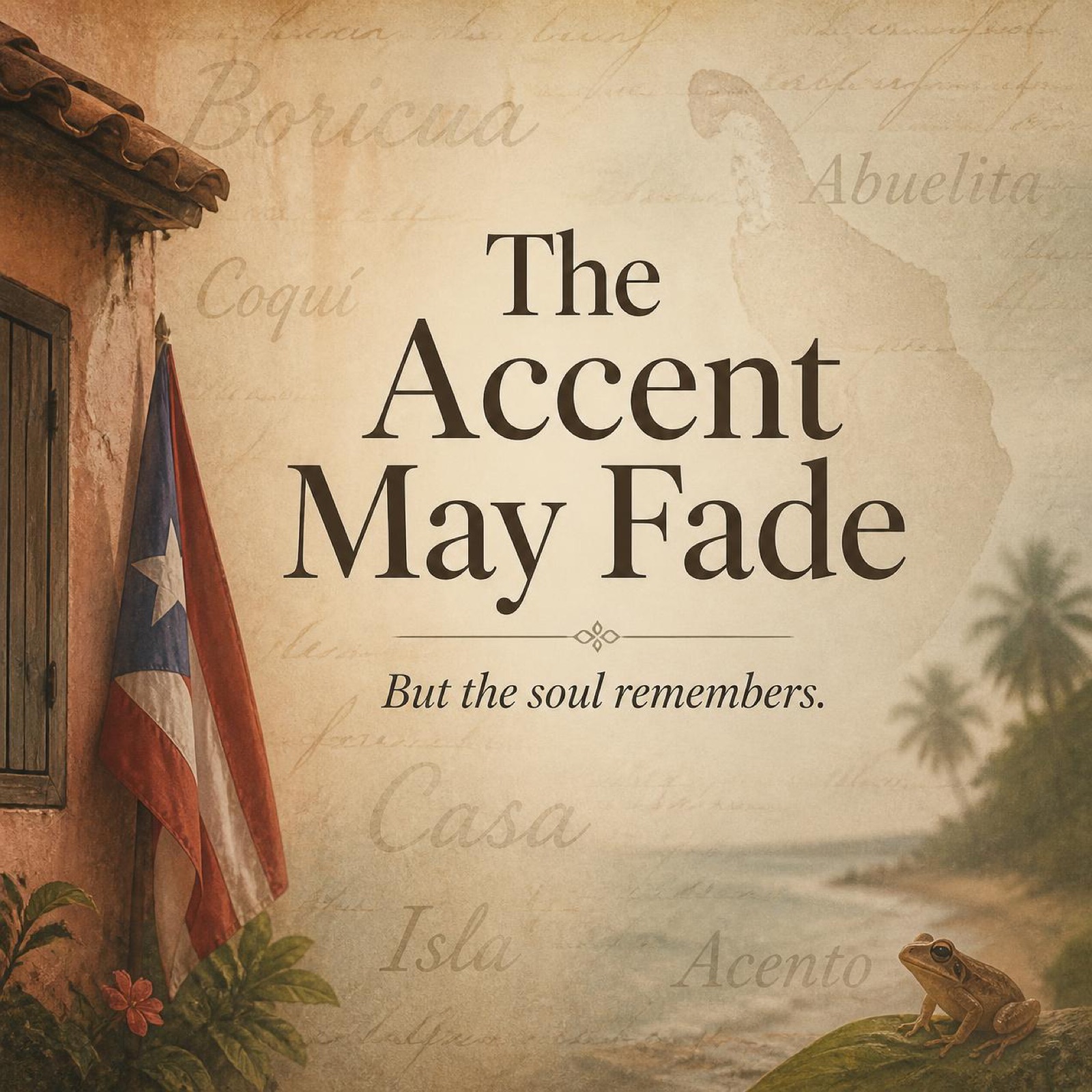
I want to reach out and hold her, to tell her that it’s okay. That she’s not alone. That there is power in being from both worlds, even if neither fully claims you. That identity is not a line—it’s a mosaic. That the accent may fade, but the soul remembers. That even if she forgets some words, she will never lose the language of where she came from. That the coquí still sings in her blood, and that matters.
I want to tell her that I see her.
Because I was her once.
And in many ways, I still am.
No pressure. No hard sell. Just a real conversation.
Ready to make sense of your Marketing & Advertising efforts?